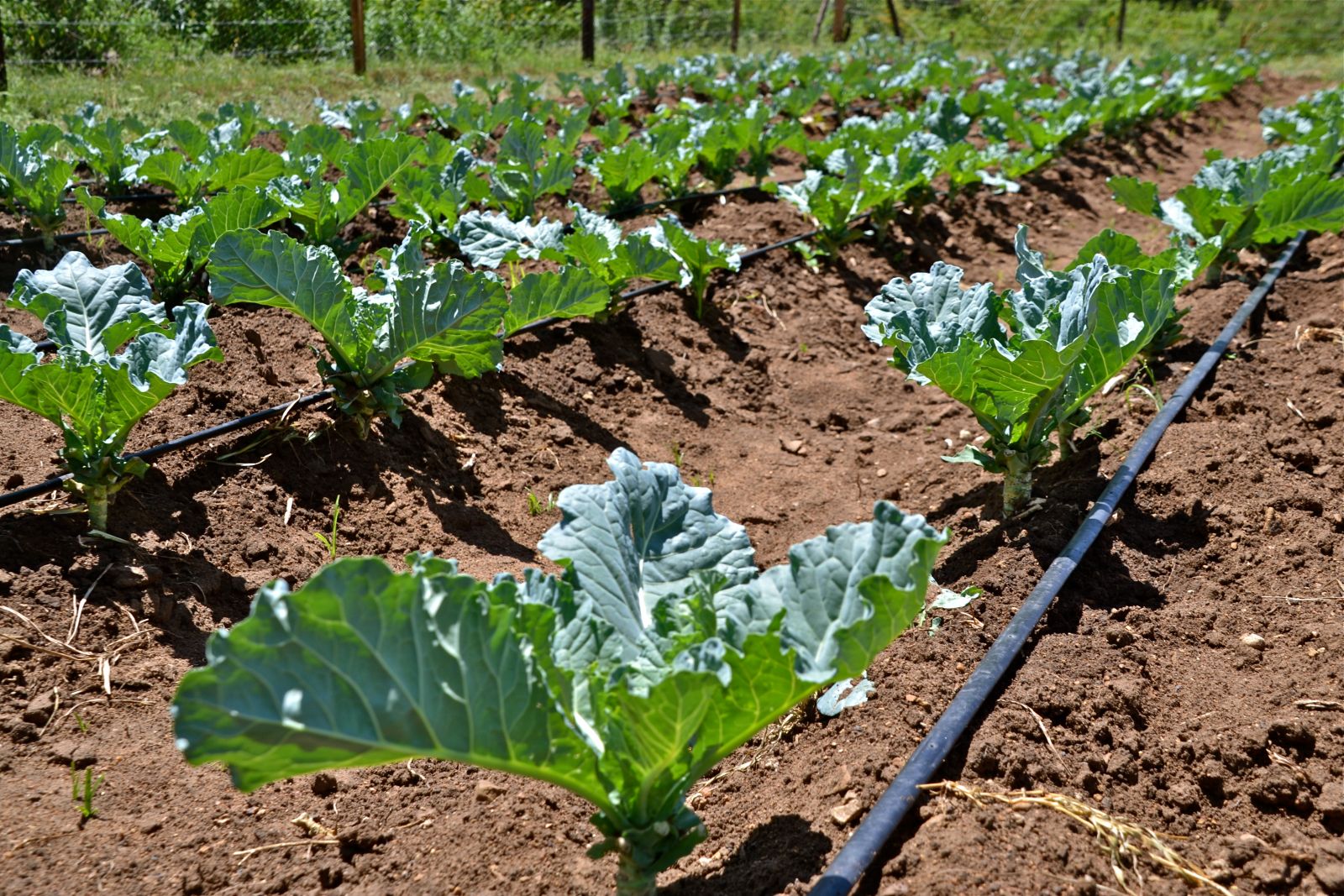
8 QUESTIONS THAT ENGINEER SHOULD ASKED BY THE CLIENT WHILE DESIGN AND INSTALLING DRIP IRRIGATION
By OCTAVIAN JUSTINE LASWAY
Bsc Irrigation and Water Resources Engineering ,3rd Yr
Sokoine University of Agriculture
8 Questions when Installing a Subsurface Drip Irrigation System
Throughout the past few years, drip and subsurface drip irrigation (SDI) have emerged as new opportunities for a crop growers looking to conserve water and other resources.
The idea of greater water use efficiency (WUE) and resource use efficiency (RUE) is enticing growers who are on the fence about converting fields, while the expectation of achieving greater yields, a proven benefit of a drip and subsurface drip irrigation system, is pushing them over.
Once it has been decided to convert a field to drip or SDI, growers can expect many questions from the irrigation engineer designing the system. Everything from crop, water supply and filtration data to automation system and manifold feed preference should be thoroughly covered by an engineer to ensure an optimal outcome.
A good engineer will ask the proper questions to ensure the best system is recommended and installed for each unique operation, but it’s equally important growers ask questions about the system as it relates to the current field and future operation plans.
which one is a good company?
The first and perhaps biggest decision a grower needs to make is which irrigation company to partner with for the drip or subsurface drip irrigation system. These systems are meant to and will last several years with proper design, installation and maintenance. A company that can answer “yes” to all the below questions is the difference in overall satisfaction and full return on investment potential versus dissatisfaction and inability to achieve maximum return on investment.
- Does the company offer a thorough consult to ensure an ideal, customized system is recommended?
- Does the company install the system?
- Does the company provide service after the sale?
Professional install is especially valuable for no-till, minimum till and conservation tillage operations. SDI systems are compatible with these practices, and a professional designer will ensure the system is installed without disturbing the soil.
Existing field considerations
After the partner company has been chosen, the initial questions to ask the irrigation engineer should focus on the present situation. These are the things that have an impact on the system and would be difficult to modify once the system is in place.
Question: How will the system affect my crop rotation schedule?
Answer: A system can be built to accommodate future crop rotations. For example, say the proposed field is primarily a vegetable crop field but will be rotated to water melon in the future. A good designer will ensure the system’s infrastructure is designed to support greater water pressure and capacity demands in the future, as water melon requires more water than most other crops.
Question: Do I need to change block size?
Answer: It’s best to reduce block size when converting to a drip or SDI system. A typical vegetable block may be 2 to 4 acres. Drip and SDI systems, while accommodating to various sizes, work best in smaller blocks, typically sized at 1 to 2 acres. These systems also work well with various block shapes, which is great news for growers with irregularly shaped fields and corners that are challenging for traditional irrigation systems like pivots.
Question: How does my soil type affect the system?
Answer: Soil type affects the system’s emitters. One design parameter affected by soil type is the drip system’s emitter flow. Sandy soil needs a different flow emitter than loamy soil. Another parameter determined by soil type is emitter spacing. A soil that encourages the spread of water can have emitters spaced further apart versus a soil that holds water close.
Question: Speaking of spacing, how are lateral spacing and depth determined?
Answer: Because vegetables requires more water than most other crops, spacing must be closer, overall, than it would be with a crop like lettuce, maize or tomatoes. As mentioned in the previous answer, soil type and texture is the next step in determining approximate emitter spacing. Light and sandy loam soil requires close spacing; medium loam soil requires medium spacing; and heavy, silt or clay loam soil requires spacing that’s farther apart.
Line depth follows a similar rule. vegetable roots are shallow than most crops; meaning system drip lines are installed 4 inches or shallow.
When depth and lateral spacing are set, lateral flow rate, emitter flow rate and spacing, and lateral wall thickness and diameter can be set. Each step is dependent on the one prior and is also affected by general characteristics of the field. For the most accurate scenario, some manufacturers offer scenario-based calculators or software such as IrriPRO, and other helpful info on their websites
Operational information
Converting a field to drip or SDI greatly affects the day-in, day-out operations of a farm. To be prepared and set up for success, every grower should ask questions about the changes to expect.
Question: How do I control irrigation periods with the new system?
Answer: There are several options for controlling irrigation periods. A grower may choose daily intervals in which the system is run for a short period of time every day to put out the daily required amount of water. Another option is running the system every few days, for a longer time period, and putting out multiple days’ worth of water in a single day.
While the choice is ultimately up to the grower and what’s best for the operation, the stage of vegetable growth factors in as well. vegetable reaches a point where it needs water every day, during which daily intervals are imperative.
With that, automation systems offer assistance with setting irrigation periods. These systems, though costly, offer time- and labor-saving benefits, typically in larger operations. In the case of a smaller farm, one with five blocks or fewer, an automation system may not be needed or provide enough value to justify the cost. Every grower should analyze the cost-to-benefit ratio to decide if it makes sense for each unique operation.
Question: Do I need to change my fertilizer?
Answer: It may not be necessary to change fertilizer. Operations that use fertilizer with higher acidic levels require a system that uses PVC or steel pipe to ensure acid doesn’t corrode the system – something that a good engineer will ask about early on in the process and specify in the system. So there shouldn’t be any need to change the fertilizer once a system is in place.
Those who mix fertilizers should seek additional training on the topic to prevent unanticipated side effects. For example, some mixes, combined with rain, can lead to emitter plugging if not managed properly.
Question: Will this new method affect my cutting schedule?
Answer: Yes. One of the biggest benefits of drip and SDI systems for vegetable is the increase in yield achieved by more cuttings. Traditional flood-irrigated fields allow for six to seven cuttings per year, where up to 12 cuttings per year is common practice in drip and SDI fields.
Question: How do I properly maintain the system?
Answer: An integrated, planned approach is advised for all drip and SDI systems. A few best practices include: During the season, periodic flushing is advised every two to four weeks to rid the system of potentially clogging debris. With that, periodic filter maintenance is recommended. Also, regular inspection of the piping system for leaks is advised to avoid water hammers (pressure surges) or air pockets.
In regions that shut down systems for winter, it’s advised to either terminate crops or run the system once a week or even every other week to prevent root intrusion. If left to dry out, leftover roots will seek out water via the emitters and plug them.
Understand and achieve
While a good engineer will take into account each unique operation when specifying and installing a drip or SDI system, it’s important all growers are proactive and ask questions that ensure a full understanding of the system – how it works and how it affects current operations. The questions above are a solid starting point; every grower should feel comfortable asking additional questions as the need arises.
Armed with this knowledge, growers are in the best position to reap benefits of greater yields, WUE and RUE that have become synonymous with drip and SDI systems.


